Come Together
Making Tracks - September 2026
Still Looking...
We're still looking for the best place to redevelop our museum. It's complicated by several factors:
- Location is important. It needs to be close to a freeway exit ramp for easy access.
- An urban or suburban area would be best. Rural areas would not allow for much attendance.
- The location must have heating and air conditioning and a water supply.
- Size is important. It should be at least 10,000 square feet to allow for room to grow.
- The cost must be no more than $3000/ month if we are to maintain free admission since we are a non-profit, community charitable service.We are asking for sponsorship from one of the surrounding cities. Failing that, we will have to charge admission. Donations remain helpful, but those have dried up since the Museum is no longer visible like it was when we were in the mall.
Nevertheless, while our search for a permanent new museum home is actively underway, we want to welcome you to our humble model train retail outlet. Following our departure from MacArthur Center, our museum layouts are safely resting in nearby storage, but our passion for the hobby is running at full steam.
We have officially partnered with BYMRR (Building Your Model Railroad, LLC) to bring you an incredible selection of pre-owned treasures at unbeatable prices.
Why Visit Our Store?
- Massive Selection: Explore a wide variety of quality pre-owned rolling stock, intricate structures, realistic scenery, and essential layout materials.
- Beat Inflation & Tariffs: With standard retail prices climbing—locomotives reaching $300–$400 and single cars topping $50—getting started shouldn't break the bank.
- Better-Than-Train-Show Pricing: Model railroading isn't slowing down; hobbyists just want fair value. We offer prices designed to beat typical train show deals every day.
- 50% of all store revenue goes back into renewal and redevelopment of the Museum.
Whether you're introducing the next generation to the rails, building your dream holiday layout, or expanding a seasoned collection on a budget, this is your premier local destination to find hidden gems without the high retail price tag.
Visit Us Today:
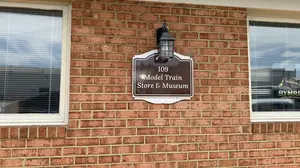
- Location: 750 Lord Dunmore Drive, Suite #109, Virginia Beach, VA 23464
- Managed By: BYMRR & The Model Railroad Museum of Hampton Roads
- Store Hours: 2-5PM on Mon, Weds, Fri and Saturday.
Stop by, browse the collection, and chat trains with fellow enthusiasts—we look forward to seeing you trackside!
In the meantime, check out the deals you can get for some of our pre-owned products:
https://bymrr.store/product-category/all-products/available-in-store/pre-owned/
Please consider supporting our Museum by donating to the cause, volunteering to help, or by buying your model railroad products from our store.
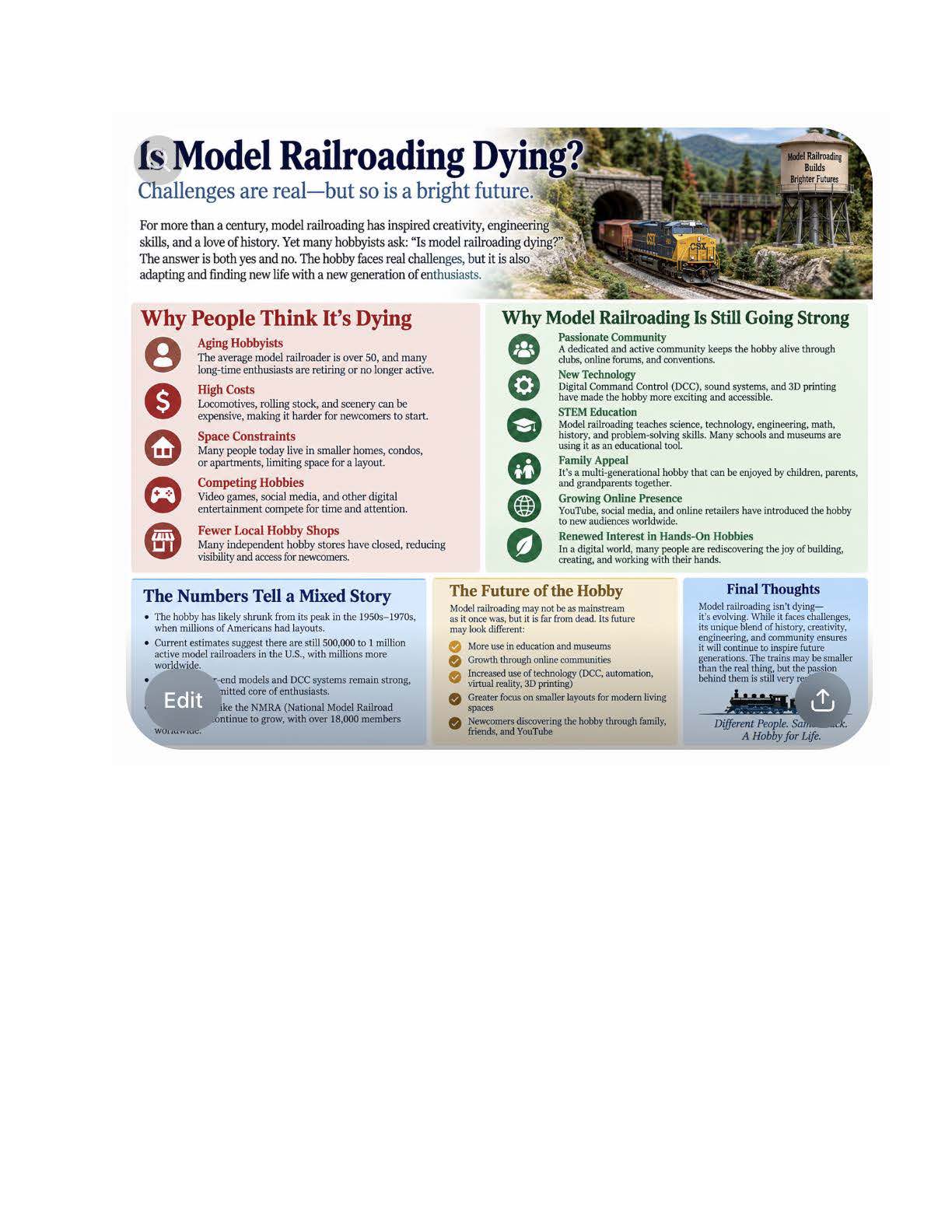
Is the Hobby of Model Railroading Dying Out?
Is the Hobby of Model Railroading Dying Out?
The hobby may be changing—but that doesn’t mean it is disappearing.
Every so often, someone asks a troubling question: Is model railroading dying?
Visit some model railroad clubs or train shows and it is easy to understand why the question comes up. Many longtime model railroaders are getting older. Local hobby shops have disappeared from many communities. Young people have countless electronic alternatives competing for their attention, and the cost of locomotives, rolling stock, structures, and electronics can make entering the hobby seem intimidating.
But declaring model railroading a dying hobby misses something important. Model railroading isn't simply disappearing—it is changing.The Challenges Are Real
There is no question that model railroading faces significant challenges. Perhaps the most obvious is the age of many participants. The generation that grew up when passenger trains, steam locomotives, and neighborhood freight trains were everyday sights is gradually passing the hobby to younger generations who have a very different relationship with railroads.
Space is another issue. The traditional basement-filling model railroad is difficult for people living in apartments, condominiums, retirement communities, and smaller homes.
Cost also matters. A newcomer looking at a sophisticated sound-equipped locomotive costing hundreds of dollars might reasonably conclude that model railroading is an expensive hobby.
And then there is competition. Video games, streaming entertainment, smartphones, social media, robotics, and other activities compete for the same leisure time that previous generations might have devoted to building a railroad.But Something Interesting Is Happening
At the same time, technology is making model railroading more fascinating than ever.
Today's locomotives can have remarkably realistic sound, lighting, and digital control. DCC allows several trains to operate independently on the same railroad. Computer programs can control signals, routes, turnouts, and entire operating sessions.
Arduino and Raspberry Pi systems allow hobbyists to build inexpensive electronic controls. 3D printers can produce structures, scenery details, replacement parts, and even rolling stock. Laser cutters and computer-aided design have opened possibilities that model railroaders of the 1960s could hardly have imagined.
Artificial intelligence may become another important tool. AI can help design track plans, develop operating schedules, research railroad history, troubleshoot electrical problems, create scenery ideas, and eventually assist with sophisticated automated train operations.
In other words, the hobby that once depended primarily on transformers, plywood, plaster, and imagination is becoming a remarkable combination of art, history, electronics, computers, engineering, and technology.Smaller May Be the Future
Perhaps one of the biggest changes will be the size of our railroads.
A model railroad doesn't have to occupy an entire basement. Shelf layouts, switching layouts, modular railroads, portable layouts, and compact N and Z scale railroads can provide years of enjoyment.
A beautifully detailed eight-foot switching layout may offer just as much creativity and operational interest as a railroad occupying an entire room.
This could make the hobby far more accessible to younger adults and people living in smaller homes.We Need to Introduce Children to Trains
The future of model railroading will ultimately depend upon introducing new generations to it.
And this is where museums, clubs, train shows, schools, and families can make an enormous difference.
Model railroading is almost tailor-made for STEM and STEAM education. Building a railroad involves electricity, electronics, mathematics, engineering, architecture, geography, history, art, woodworking, computer programming, and problem solving.
Give a child a throttle and allow that child to actually operate a train, and something happens that a static museum display cannot duplicate.
The railroad suddenly becomes an experience.
That experience may plant the seed for a lifelong hobby—or even an interest in engineering, transportation, electronics, history, or another technical career.The Internet May Be Helping, Not Hurting
The disappearance of many neighborhood hobby shops has been painful, but the Internet has created a different model railroad community.
A beginner can watch a scenery demonstration online, participate in a discussion group, download a track plan, order a locomotive, learn how to install a decoder, watch an operating session on the other side of the world, and ask other hobbyists for advice—all without leaving home.
Online stores have also made specialized products available to model railroaders who live hundreds of miles from the nearest traditional hobby shop.
The community has become less local, but in many ways it has also become more global.Our Biggest Problem May Be How We Present the Hobby
Perhaps model railroading's greatest challenge isn't that young people aren't interested.
Maybe we haven't always shown them what modern model railroading actually is.
Instead of presenting it simply as "playing with trains," consider what happens when someone builds a modern model railroad:
They become a carpenter, electrician, artist, historian, engineer, landscape designer, computer programmer, architect, researcher, dispatcher—and sometimes a miniature city planner.
Few hobbies combine so many different interests in one activity.
That is a powerful message for the next generation.So, Is Model Railroading Dying?
No—but the hobby is evolving.
The huge home layouts and neighborhood hobby shops that characterized an earlier generation may become less common. In their place we may see smaller layouts, modular railroads, sophisticated electronics, 3D printing, automation, online communities, museum layouts, and greater integration with STEM education.
The real question therefore isn't whether model railroading will survive.
It is what model railroading will look like twenty years from now.
Those of us who already love the hobby have an important role to play. We need to welcome beginners, encourage children, support clubs and museums, share what we know, embrace useful new technology, and—most importantly—put a train controller into the hands of someone who has never operated a model train before.
Because the best way to ensure the future of model railroading is remarkably simple:
Invite someone else aboard.
10 Ways We Can Keep Model Railroading Growing:
[To enlarge, right click on image -->Open image in a new tab-->click on the new tab and then click on the image to enlarge it.]
Train Song of the Month
By Frank Reed

The L&N Don't Stop Here Anymore (1965)
Jean Ritchie
https://youtu.be/x1CNua_KWRM?is=9K4cm1ogByj4gcCA
Other notable versions:
Johnny Cash (1979)
Kathy Mattea (2008)
Billy Bragg, Joe Henry (2016)
"The L&N Don't Stop Here Anymore" is a ballard written and released by Jean Ritchie 1965. The song describes the devastating economic decline of coal mining towns and the empty Louisville and Nashville railroad tracks.
Jean Ruth Ritchie (December 8, 1922 – June 1, 2015) was an American folk singer, songwriter, and Appalachian dulcimer player, called by some the "Mother of Folk". In her youth she learned hundreds of folk songs in the traditional way (orally, from her family and community), many of which were Appalachian variants of centuries-old British, Scottish and Irish songs, including dozens of Child Ballads. In adulthood, she shared these songs with wide audiences, as well as writing some of her own songs using traditional foundations.
The Louisville and Nashville Railroad (reporting mark LN), commonly called the L&N, was a Class 1 railroad that operated freight and passenger services in the southeast United States. Chartered by the Commonwealth of Kentucky in 1850, the road grew into one of the great success stories of American business.
Train Show Calendar
https://trainshows.net/calendar/
Also check out the page on this site listing Local and Regional Train Destinations.
Videos of the Month
Comments
Tell us what you think about this newsletter, or about model railroading in general. What scale do you model? Tell us about your layout. Send us some pictures to mrmhr@mrmhr.org and we'll put them in the next newsletter.
Thanks for Your Ongoing Support
Thanks for reading this issue of Making Tracks. Stay tuned to the website and to the monthly newsletter to stay informed and find out where our next location will be as we pick up the pieces and continue to move forward.

We are proud to be members of the following organizations:
The Virginia Association of Museums
The Train Collectors Association
Hampton Roads Chamber of Commerce
Hobby Manufacturers Association
National Railroad Historical Society
(Endorsed advertisement)
Welcome to
New Tracks Modeling!
New Tracks Modeling is an exciting digital opportunity to obtain mentoring to help you improve your modeling. You will meet talented modelers and manufacturers from all over the world who will share their model building expertise and artistic advice. New Tracks Modeling is open to all modelers of all skill levels in any scale or gauge.
Our Shows are live every Wednesday evening at 7pm Eastern/4pm Western on Zoom and YouTube. By subscribing to our website newtracksmodeling.com you’ll receive email notices containing links to both the Zoom and YouTube presentations.
New Tracks Modeling Mentoring Scholarship
Your donation will help to provide scholarships for model railroaders who are HS graduates and continuing their education in a STEAM field.Your generosity is greatly appreciated!
To donate click on this link.
https://www.zeffy.com/en-US/donation-form/038439bf-a552-44e2-9b46-ef54aaa0e274

Building-Your-Model-Railroad.com (BYMRR.com) Is the most comprehensive website available on model railroading, providing written tutorials on how to build a model railroad from benchwork to scenery to advanced automation. This has become the 'BIBLE" for many model railroaders around the world since 2009.
Model Railroader's Guide to Steam Engines
🚂 Model Railroader's Guide: “Modeling 1940s–1950s Steam: HO & N Scale Guide”
If you want to recreate the golden age of steam on your layout, here’s how to match locomotive types to HO and N scale models—with practical tips.
🚛 Freight Locomotives:
Mikado (2-8-2)
Berkshire (2-8-4)
Santa Fe (2-10-2)
🚆 Passenger Locomotives:
Pacific (4-6-2)
Hudson (4-6-4) ⛰️
Heavy Power: Articulated (2-6-6-2, 2-8-8-2, etc.)
🏭 Yard Operations:
Switchers (0-6-0, 0-8-0)
🧩 Layout Planning Tips:
🎯 Beginner Setup Recommendation:
If starting fresh:
- 1 Mikado (freight)
- 1 Pacific (passenger)
- 1 switcher (yard)
👉 This gives you a complete, realistic operating railroad.

Now Partnering with BYMRR Train Store:

Share this site on your favorite Social Media page!
Recent Articles


-
Making-Tracks-September-2026
Sep 13, 26 08:53 PM
 Making-Tracks-September-2026
 -
Making-Tracks-Summer-2026
Aug 17, 26 08:38 AM
 The official newsletter for the Model Railroad Museum of Hampton Roads
 -
Making-Tracks-June-2026
Jun 08, 26 03:23 PM
 The official newsletter of the Model Railroad Museum of Hampton Roads


The Birth of Virginia Beach
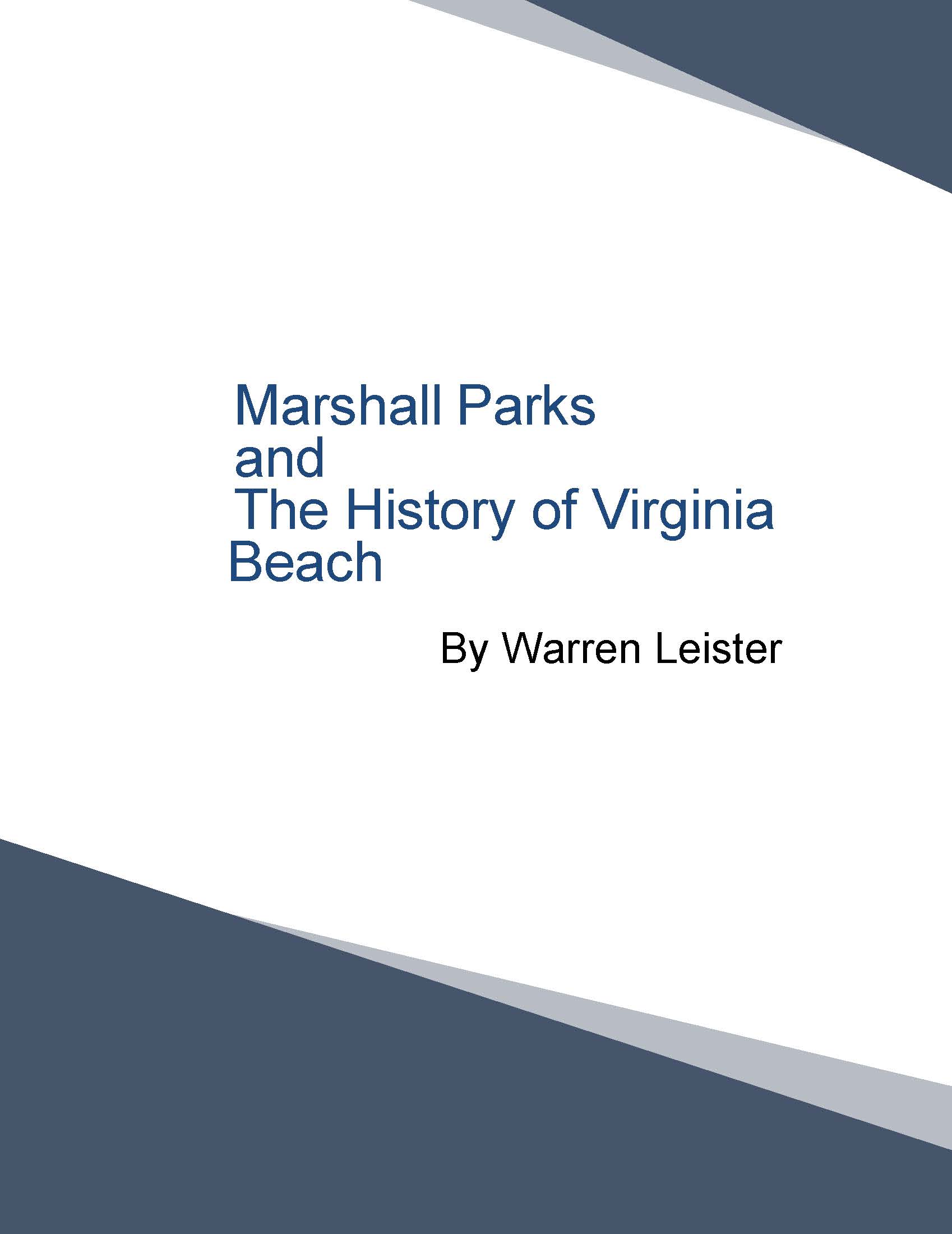
We have created and published a new historical document on the Birth of Virginia Beach. This has been written by our historian Warren Leister after researching the era and the people involved for several years. Excepts have been published here in our newsletter previously, but the information is now available all together in a 99 page document that you can purchase in our store. It factually explores the events, the dedicated people and the interesting culture in which they lived. Pick up your copy today!
PayPal Giving Fund:
No Credit Card Fees
OR...
Charitable Donations through PayPal, Credit or Debit cards:
(Opt in or out of paying credit card fees)
Get Updates and Special Offers in
the MRMHR Newsletter:
Making Tracks
Sign Up Here...
The official newsletter for the Model Railroad Museum of Hampton Roads
Why Attend Train Shows? The Hidden Value Behind the Hobby
Train shows might seem, at first glance, like simple gatherings of enthusiasts—but in reality, they are dynamic spaces where knowledge, community, and discovery intersect. Much like the number 5, symbolizing curiosity and exploration, train shows offer multiple dimensions of value that go far beyond just looking at model railroads.
Let’s break down the advantages.
1. See Rare Models and Layouts Up Close
Train shows often feature:
- Massive, highly detailed layouts you won’t see anywhere else
- Rare or discontinued locomotives and rolling stock
- Custom-built scenery and miniature worlds
👉 Photos online don’t compare to seeing the craftsmanship in person—the scale, motion, and detail come alive.🤝 2. Connect with a Community
One of the biggest advantages is the people.
At train shows, you can:
- Meet experienced hobbyists and learn directly from them
- Join clubs and local groups
- Share ideas, tips, and stories
👉 For many, this sense of community is the core reason they keep coming back.
💰 3. Find Deals and Hard-to-Get Items
Vendors at train shows often sell:
- Discounted new items
- Used or vintage pieces
- Parts for repairs or kitbashing
👉 You can often find items that are impossible to locate online—or at much better prices.🧠 4. Learn New Skills
Train shows are educational hubs:
- Clinics and demonstrations (weathering, wiring, scenery building)
- Advice on layouts, electronics, and maintenance
- Exposure to different scales and techniques
👉 Whether you're a beginner or advanced modeler, there’s always something new to learn.
🚸 5. Fun for All Ages
Train shows are surprisingly family-friendly:
- Interactive displays for kids
- Simple joy of watching trains run
- A gateway into STEM interests
👉 They blend nostalgia for adults with excitement for younger generations.
🔢 The “5 Benefits” Framework
In true symbolic fashion, train shows align neatly with five core advantages:
- Visual Inspiration – See what’s possible
- Social Connection – Meet like-minded people
- Economic Value – Find deals and rare items
- Skill Building – Learn by observing and asking
- Entertainment – Enjoy a unique, immersive experience
Conclusion
Train shows are more than events—they’re living ecosystems of the rail hobby, where creativity, engineering, and community all converge. Like the number 5, they represent movement, interaction, and discovery.
If you’ve never attended one, it might just transform how you experience trains—from something you watch… to something you truly engage with.

Model Railroad Museum of Hampton Roads
©Copyright 2022-2026. All Rights Reserved.